High resistance to corrosive fluids
On fluids that corrode metal valves, such as acids, bases and saline solutions, a PVC, CPVC, PP or PVDF body runs for years without corroding.
Product group · Valve Group
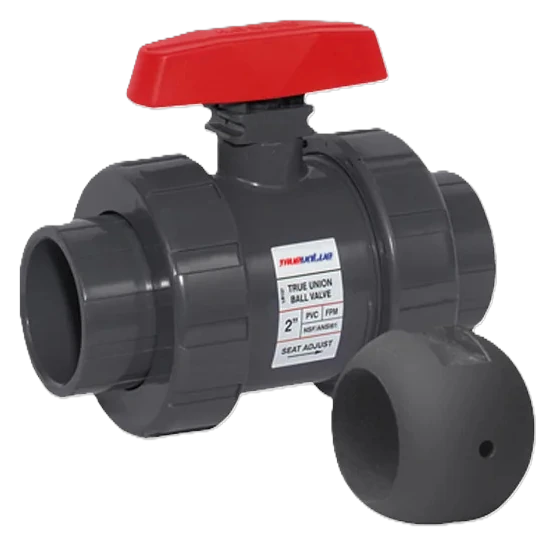
Thermoplastic valves are made from highly chemical-resistant plastic materials such as PVC, CPVC, PP and PVDF; they offer a long-lasting solution on acidic, alkaline or saline fluid lines where metal valves corrode. Their lightweight construction simplifies installation, while solvent-welded or threaded connections allow fast setup. As Denfor Endüstriyel, we supply thermoplastic valves in butterfly, ball and check types, with the body material matched to the fluid's chemical type.
Why it matters
It offers a lightweight, highly chemical-resistant alternative on chemical lines where metal valves corrode.
On fluids that corrode metal valves, such as acids, bases and saline solutions, a PVC, CPVC, PP or PVDF body runs for years without corroding.
Noticeably lighter than metal valves; handling and installation become easier, and the load on support structures is reduced.
Depending on line type and diameter, it offers solvent-cement, threaded or flanged connection options; flanged types compatible with metal line fittings are also available.
Both line-shutoff and backflow-prevention needs can be met with thermoplastic material, using the same chemical-resistance principle.
Types
All three resist corrosion with a plastic body; what sets them apart is the material type and chemical compatibility.
An economical, widely used material choice on water treatment, pool-chemical and moderately corrosive lines.
Has a wider chemical-resistance range and a higher temperature tolerance than PVC; preferred on industrial process lines.
The thermoplastic material with the highest chemical and temperature resistance; used on aggressive acid/solvent lines and in processes requiring high purity.
Selection criteria
Selection can't be made without the first two points. The rest determine the material type and connection type.
Line diameter
Determined by the nominal diameter of the existing pipeline.
DN size
Fluid's chemical type
The most critical piece of data in determining the body material (PVC/CPVC/PP/PVDF).
Chemical name + concentration
Operating temperature
Determines the material's temperature resistance limit.
°C
Connection type
Whether the existing line is solvent-welded, threaded or flanged.
Solvent weld / threaded / flanged
Valve type
Whether line shutoff or backflow prevention is required.
Butterfly / ball / check
Pressure class
Must match the line's operating pressure.
bar
It's fine if you don't have all of it. We'll fill in the gaps together with you.
Create a quote requestFAQ
The questions we hear most often when quoting thermoplastic valves.
It depends on the material: PVC/CPVC resist moderate acid-base solutions, PP a wider chemical range, and PVDF the most aggressive acids and solvents; the right choice should be made based on the fluid's exact chemical content.
Thermoplastic valves are generally made in lower pressure classes than metal valves; on high-pressure lines the suitable PN class needs to be confirmed.
Solvent-cement joints are permanent and cannot be disassembled; a threaded or flanged connection should be chosen at points that need maintenance.
Prolonged UV exposure can make the plastic material brittle over time; for outdoor applications a UV-resistant compound or a protective coating is recommended.
No. While our office is on Istanbul's Anatolian side (Ataşehir), we supply and ship across Istanbul's European side, the surrounding provinces and the Marmara region, and Turkey as a whole — covering your equipment end to end, from a single source.
Next step
Share the fluid's chemical type and your line diameter, and let's determine the right thermoplastic valve for your line together.
Related products
Complementary equipment you may need for your project.