Ductless, direct space heating
Requires no air handling unit or air duct; it heats the space it's in directly by natural convection. A simple, low-maintenance solution.
Product group · Heat Transfer Products
Heating units that transfer the heat of the hot water or steam passing through them directly into the surrounding air by natural convection. The finned tube bundle is housed inside a galvanized sheet-metal casing, giving both a large heat transfer surface and an impact-resistant structure.
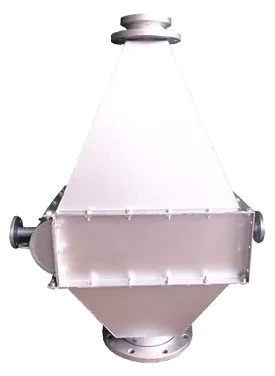
Radiator · air rises vertically by natural convection, hot water passes horizontally
Why it matters
Without needing ductwork or an air handling unit, it heats the space directly by transferring the heat of hot water or steam into the air.
Requires no air handling unit or air duct; it heats the space it's in directly by natural convection. A simple, low-maintenance solution.
In large, high-ceilinged spaces such as workshops, warehouses and hangars, it can be placed at specific points or along a line to provide heating at a low operating cost.
Connects directly to the hot water or steam circuit coming from an existing boiler room or central heating line; no additional conversion equipment is needed.
With floor-standing or wall-hung mounting options, it adapts to different placement needs in spaces with limited floor area or high ceilings.
Types
All three heat by natural convection through a finned tube bundle; what sets them apart is the heat source (water/steam) and the size/mounting requirement.
Running on the standard hot water circuit from the boiler room, the most common type for factory and warehouse heating.
Fed from a steam line, with a high heat transfer capacity, this type requires condensate drainage (a steam trap).
A custom-built type for length, height or capacity needs that standard sizes don't cover.
Selection criteria
Capacity alone isn't enough. Once the six points below are clear, the choice narrows to a single model.
Heating capacity
The space's heat loss together with the target indoor temperature determines the capacity. An undersized radiator won't reach the target temperature.
kW and volume/m² data
Fluid type and temperature
Whether hot water or steam will be used; for water, the inlet-outlet temperature determines the tube-fin combination.
Hot water (e.g. 80/60 °C) or steam pressure
Operating pressure
The circuit's operating pressure determines the tube wall thickness and connection class.
PN6 / PN10 / PN16
Mounting style
Whether it will be mounted floor-standing or wall-hung changes the casing and bracket design.
Floor-standing / wall-hung / wall type
Space characteristics
Ceiling height, the size of the space and its heat loss determine the number of radiators and their layout.
m² / m³ and ceiling height
Connection size
The connection size and orientation to the existing installation line must be clear from the start.
DN sizes + connection orientation
It's fine if you don't have all of it. We'll fill in the gaps together with you.
Create a quote requestFAQ
The questions we hear most often when quoting radiators.
Both work with a finned tube bundle; the difference is where the air movement comes from. A heating coil works with air forced through it by an air handling unit or a duct; a radiator needs no duct and heats room air directly by natural convection.
In large-volume spaces such as factories, workshops, warehouses and hangars, where a central ducted system isn't economical; also preferred for drying environments and process area heating.
This depends on your existing or planned heat source. If there's a hot water circuit from the boiler room, a hot water radiator is used; if there's a steam line, the steam type is preferred, planned together with condensate drainage (a steam trap).
The space's heat loss is calculated to find the total capacity needed (kW); this capacity is usually met with several units distributed along the line rather than one large radiator.
No. While our office is on Istanbul's Anatolian side (Ataşehir), we supply and ship across Istanbul's European side, the surrounding provinces and the Marmara region, and Turkey as a whole — covering your equipment end to end, from a single source.
Next step
Share your space's heat loss, fluid type and mounting preference, and let's work out the right radiator type and quantity together.
Related products
Complementary equipment you may need for your project.