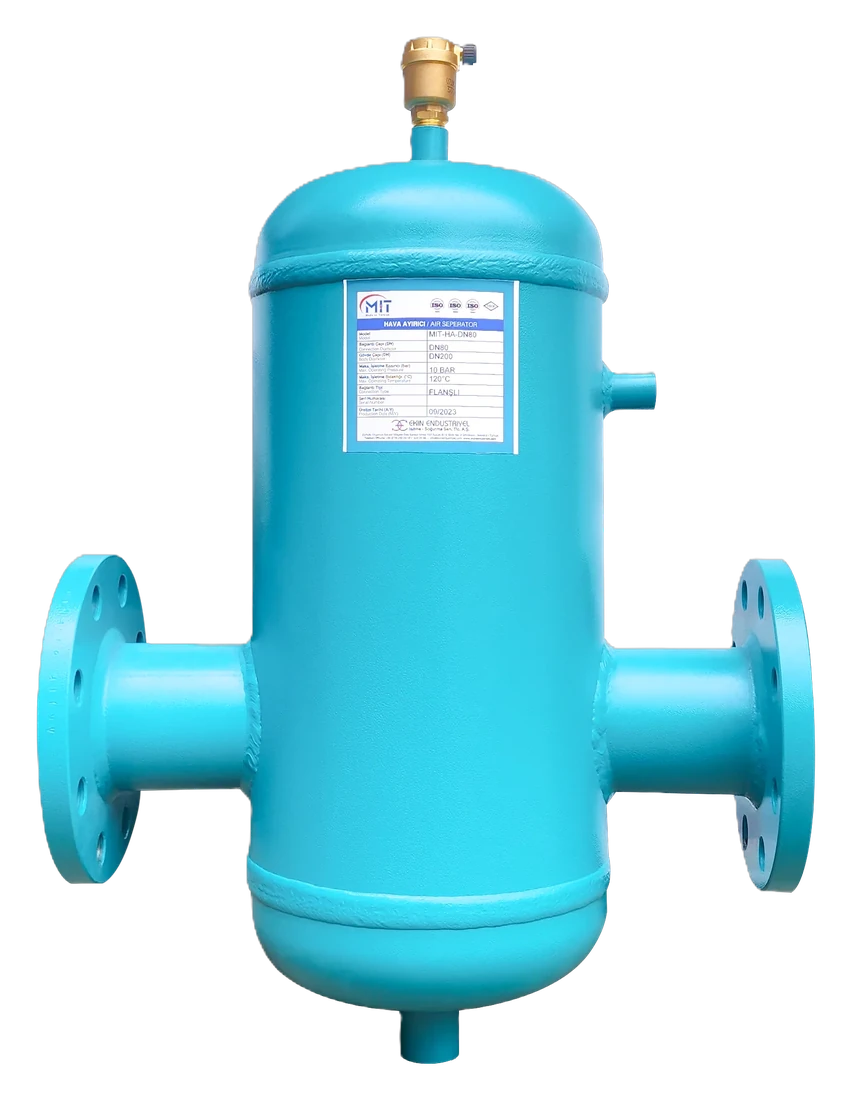
Discharges free and dissolved air
Air bubbles in the system cause noise, corrosion and pump performance loss; the separator automatically discharges this air.
Product group · Pressure Vessels
Air separators remove free and dissolved air from system water, while dirt separators remove circulating particulates; these two contaminants are among the most common causes of reduced pump and heat exchanger performance. At Denfor Endüstriyel, we supply air and dirt separators, either standalone or in a combined shell, sized to line diameter and flow rate.
Why it matters
It protects pump and heat exchanger performance by removing air and particulates from system water.
Air bubbles in the system cause noise, corrosion and pump performance loss; the separator automatically discharges this air.
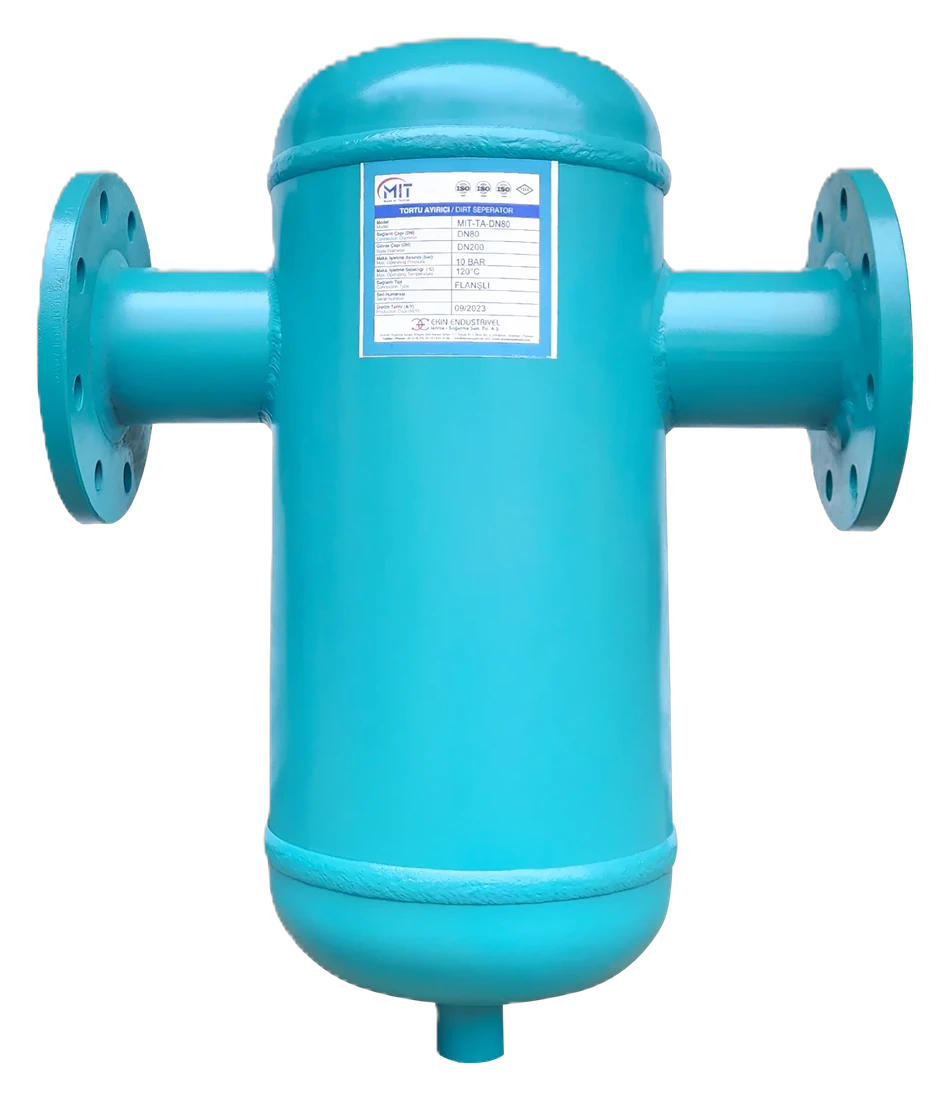
Circulating particulates such as rust, scale and installation debris are captured inside the separator, preventing clogging of exchanger plates and pump impellers.
As wear and cavitation risks from air and particulates are reduced, pump seals and exchanger surfaces keep operating efficiently for longer.
The discharge valve at the bottom allows accumulated sediment to be easily drained periodically without stopping the system.
Types
All three separate out contaminants at low flow velocity; what differs is which contaminant they target.
Discharges free and dissolved air from system water via an automatic air vent valve; used continuously both at initial commissioning and during operation.
Captures circulating rust, scale and installation debris particles; especially recommended for exchanger and pump protection in renovated or older installations.
Combines both air and dirt separation functions in a single shell; preferred in boiler rooms with limited installation space.
Selection criteria
Selection cannot be made without the first two items. The rest determine type and fittings.
Line flow rate
Shell diameter is determined by the flow rate of the line it is installed on.
m³/h
Targeted contaminant
Whether air, dirt, or both are the priority to remove.
Air / dirt / combined
Working pressure and temperature
Must match the system's operating conditions.
bar / °C
Discharge type
An automatic air vent valve, or a manual discharge valve.
Automatic / manual
Need for a magnetic element
A magnetic cartridge can be added if iron-based particulates are heavy.
Yes / no
Connection size and installation point
A connection matching line diameter and an installation position (usually just before pump suction).
DN size + installation point
It's fine if you don't have all of it. We'll fill in the gaps together with you.
Create a quote requestFAQ
The questions we encounter most often at the air/dirt separator quote stage.
An air separator takes priority if the system has air noise, cavitation, or air build-up complaints in radiators; a dirt separator takes priority if there is exchanger/pump clogging or cloudy/dirty water complaints. A combined model is preferred when it is unclear.
Installation is generally recommended just before pump suction, close to the system's hottest and lowest-pressure point; air separates out most easily there.
Iron-based (magnetite) particles may not be fully captured by normal filtration; the magnetic cartridge additionally captures these particles, strengthening exchanger and pump protection.
Periodic sediment draining from the discharge valve is recommended; more frequent checks in the first few months are useful for renovated or older installations.
No. While our office is on Istanbul's Anatolian side (Ataşehir), we supply and ship across Istanbul's European side, the surrounding provinces and the Marmara region, and Turkey as a whole — covering your equipment end to end, from a single source.
Next step
Share your line flow rate and which issue you want to prioritize, and let's work out the right separator for your system together.
Related products
Complementary equipment you may need for your project.