Precise, stable pressure control
Pressure sensors and the control panel keep system pressure stable within a narrow range; it operates far more precisely than a diaphragm tank.
Product group · Pressure Vessels
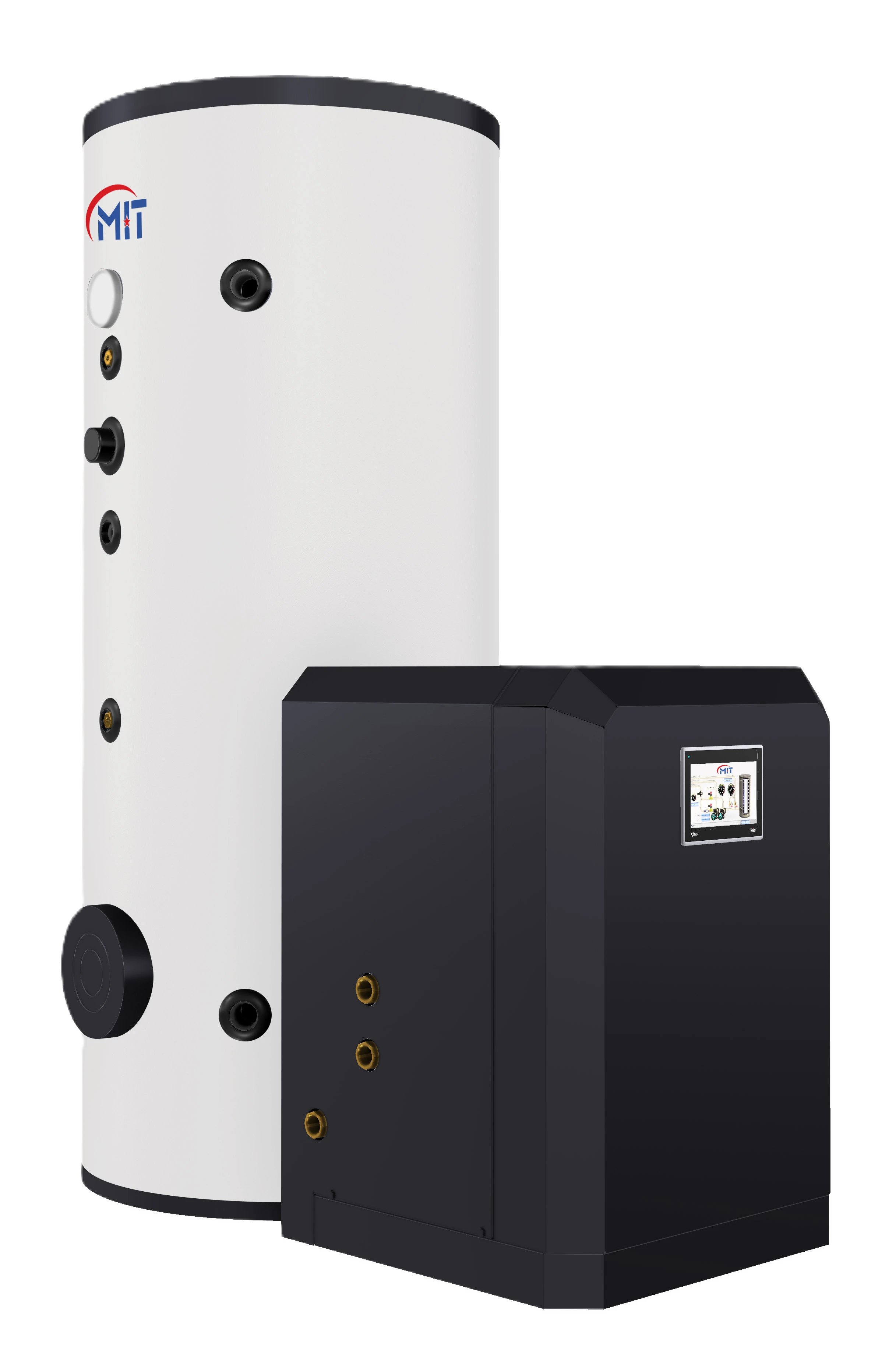
Pumped expansion systems hold pressure far more precisely than a diaphragm tank in large-volume installations; they automatically add water when pressure drops and bleed excess water back to the tank when it rises. At Denfor Endüstriyel, we supply panel-controlled pumped expansion systems for district heating, high-rise buildings and industrial facility applications, together with commissioning support.
Why it matters
It controls pressure precisely and automatically at the points where a diaphragm tank falls short in large-volume installations.
Pressure sensors and the control panel keep system pressure stable within a narrow range; it operates far more precisely than a diaphragm tank.
When pressure drops, the pump engages and adds water; when it rises, excess water is drawn back into the tank — no manual intervention required.
In systems with a large water volume, such as district heating lines and high-rise buildings, it goes beyond the practical limits of diaphragm tank sizes.
Pressure and level settings are adjusted to site conditions; it is supplied together with commissioning and periodic service support.
Types
All three deliver precise pressure through a pump + control panel; what differs is capacity and redundancy level.
The standard solution for medium-sized installations, automatically balancing pressure with a single pump and control panel.
Thanks to a redundant pump setup, system pressure is maintained without interruption even if one pump fails; preferred for critical facilities.
Built with a high-capacity tank and pump set for large-water-volume district heating and high-rise building installations.
Selection criteria
Selection cannot be made without the first two items. The rest determine pump count and control hardware.
System water volume
Tank and pump capacity are calculated from the total water volume in the piping.
L
Required pressure precision
Critical processes or high-rise lines call for a narrower tolerance.
± bar
Pump count/redundancy
A single pump, or a redundant setup where interruption is not acceptable.
1 / multi-pump
Building height/static pressure
Elevation difference between the highest point and the system.
m / bar
Remote monitoring need
Whether integration with building automation is required.
Yes / no
Connection size and installation point
Inlet/outlet ports and boiler room layout.
DN size + installation clearance
It's fine if you don't have all of it. We'll fill in the gaps together with you.
Create a quote requestFAQ
The questions we encounter most often at the pumped expansion system quote stage.
As system water volume grows, the diaphragm tank size required becomes impractical; in large-volume district heating and high-rise building installations, a pumped system offers a more economical and precise solution.
Thanks to the control panel and sensors, it typically operates with a precision of around ±0.1 bar; it keeps pressure within a much narrower range than a diaphragm tank.
A redundant pump is recommended for critical facilities where interruption is not acceptable (such as hospitals or data centers); a single pump is usually enough for standard residential/commercial installations.
Pressure and level settings are adjusted to site conditions, and the system is monitored over several load cycles to confirm it operates correctly; this process is provided together with the supply.
No. While our office is on Istanbul's Anatolian side (Ataşehir), we supply and ship across Istanbul's European side, the surrounding provinces and the Marmara region, and Turkey as a whole — covering your equipment end to end, from a single source.
Next step
Share your system water volume and building height, and let's work out the right pumped expansion system for your installation together.
Related products
Complementary equipment you may need for your project.