The main element that carries out heat transfer
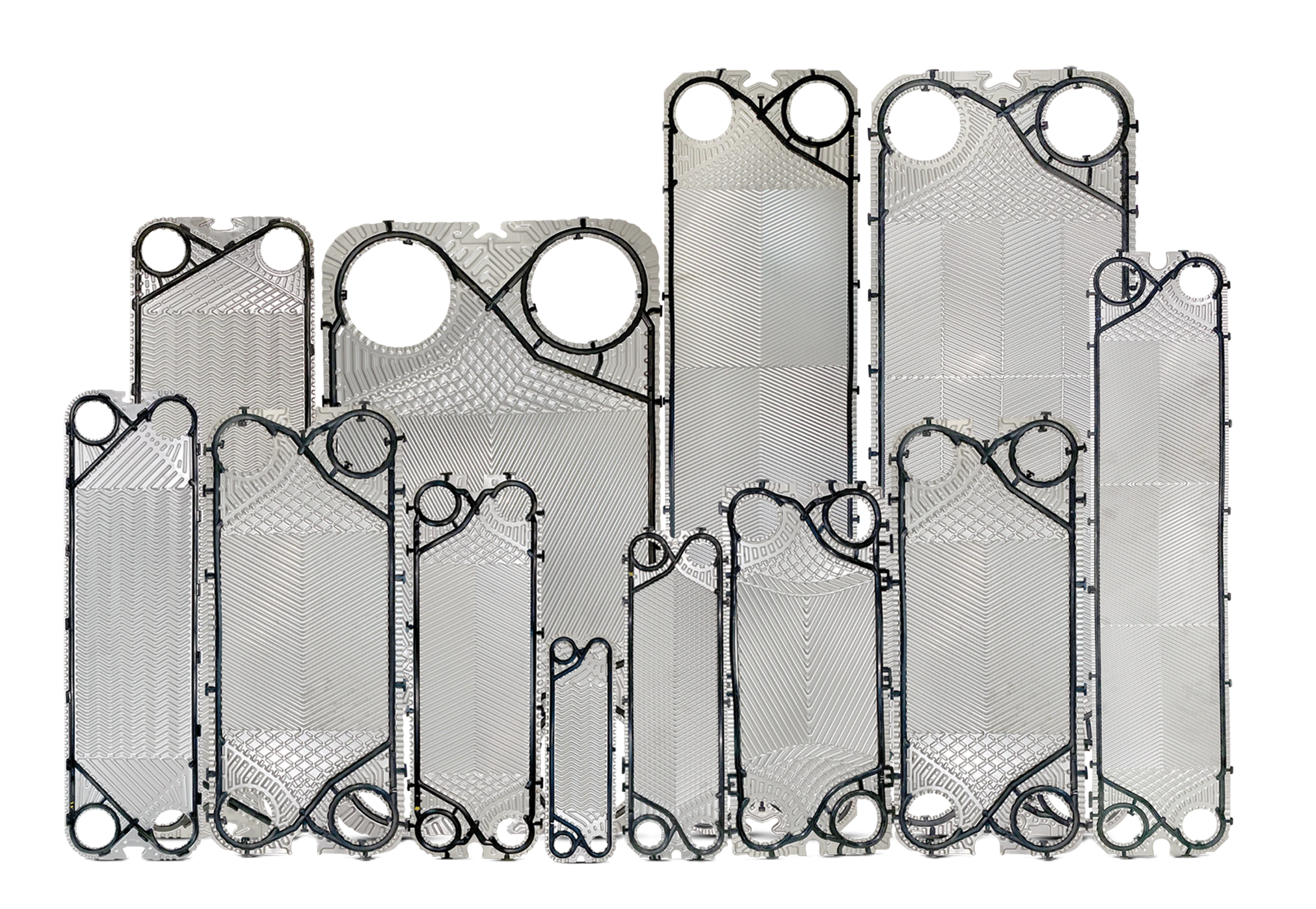
The groove pattern on the plate surface induces turbulence in the fluid, raising the heat transfer coefficient; the exchanger's efficiency depends directly on the plates' condition.
Product group · Spare Parts
Heat exchanger plates are the core element that carries out heat transfer in gasketed plate heat exchangers. The groove pattern on the surface induces turbulence in the fluid, boosting transfer; replacing plates that have worn, corroded or deformed restores the exchanger to its original performance. At Denfor Endüstriyel, we supply heat exchanger plates compatible with different brands and models, in stainless steel, titanium and special alloy options. The correct model is identified from the existing exchanger's nameplate information or from a sample plate.
Why it matters
It is the main element that carries out heat transfer in a plate heat exchanger; renewing plates that are worn or damaged returns the exchanger to its original performance.
The groove pattern on the plate surface induces turbulence in the fluid, raising the heat transfer coefficient; the exchanger's efficiency depends directly on the plates' condition.
Replacing plates affected by corrosion, wear or deformation restores day-one performance without needing to renew the whole frame.
By adding extra plates to the existing exchanger, the heat transfer area — and therefore the capacity — can be increased without replacing the frame.
The correct plate for different brands and models is identified from the existing exchanger's nameplate information or from a sample plate.
Types
All three work on the same principle; what sets them apart is their resistance to the fluid's chemical content.
The standard material choice for water and general industrial fluids — economical and widely stocked.
Offers far higher corrosion resistance than stainless steel against aggressive fluids such as chloride-bearing water or seawater.
Made from nickel alloys or other special materials selected for the specific fluid, for high-temperature or specialty chemical processes.
Selection criteria
Selection can't be made without the first two items. The rest determine the material and hardware detail.
Existing exchanger's brand/model
Plate size and groove pattern are model-specific.
Brand + model
Reason for replacement
Whether it's a wear/damage replacement or a capacity increase.
Replacement / addition
Fluid type
Determines the material choice (stainless / titanium / alloy).
Fluid name
Operating temperature and pressure
Affects material and gasket compatibility.
°C + bar
Number of plates needed
Whether a full set or a partial replacement is needed.
Quantity
Sample or nameplate information
The most reliable method for identifying the correct model.
Sample / nameplate photo
It's fine if you don't have all of it. We'll fill in the gaps together with you.
Create a quote requestFAQ
The questions we hear most often when quoting heat exchanger plates.
The most reliable method is to photograph and send the existing exchanger's nameplate information (brand, model, serial number), or to send us a sample plate.
Yes, we can supply equivalent or original heat exchanger plates compatible with most widely used brands and models on the market.
This is determined from the existing exchanger's heat load calculation and the frame's physical capacity; the assessment is made from the nameplate information.
Renewing the gaskets at the same time the plates are opened reduces the risk of a repeat leak and avoids paying for labor twice; we recommend quoting them together.
No. While our office is on Istanbul's Anatolian side (Ataşehir), we supply and ship across Istanbul's European side, the surrounding provinces and the Marmara region, and Turkey as a whole — covering your equipment end to end, from a single source.
Next step
Share your existing exchanger's brand/model or nameplate information, and we'll identify the right plate together.
Related products
Complementary equipment you may need for your project.