Seals between the plates
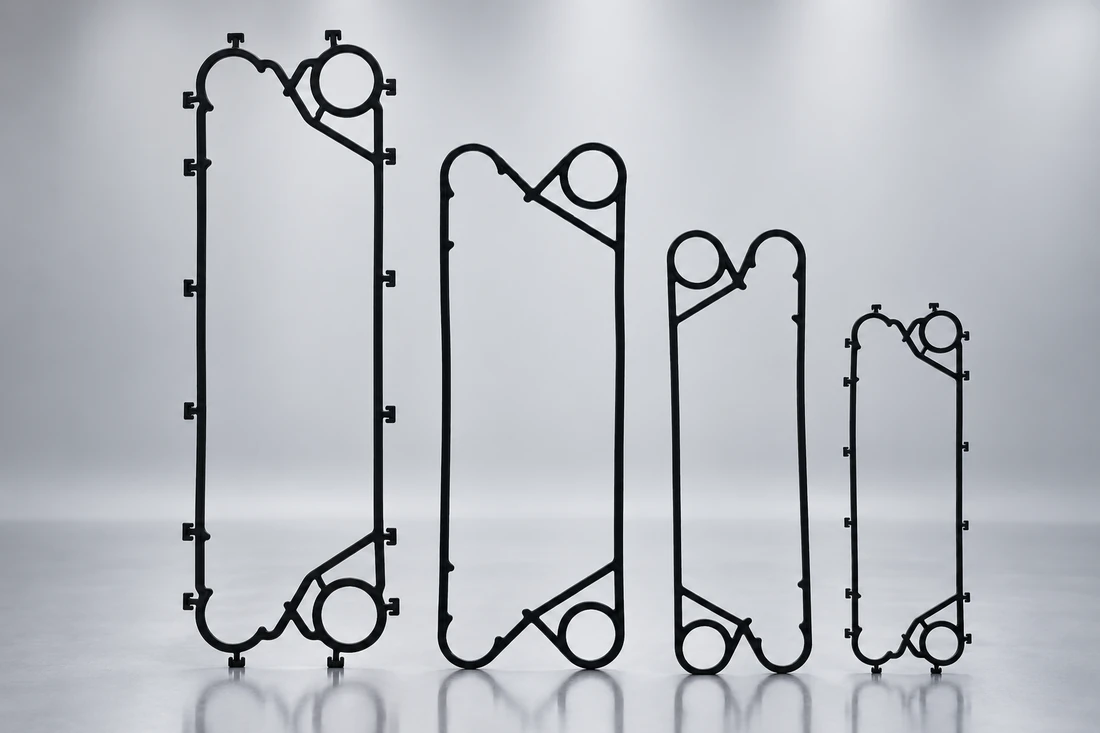
Placed between each pair of plates, the gasket prevents two different fluids (for example heating water and domestic water) from mixing.
Product group · Spare Parts
Gaskets are the elements that seal between the plates and prevent two fluids from mixing. Their elastomer structure hardens over time under temperature, pressure and chemical exposure; once leaking begins, the gasket set needs to be renewed. At Denfor Endüstriyel, we supply gasket materials — primarily NBR, EPDM and Viton — matched to the fluid type and operating temperature, in clip-on and glued types, by brand and model.
Why it matters
It seals between the plates and prevents two fluids from mixing; the elastomer structure hardens over time and needs periodic renewal.
Placed between each pair of plates, the gasket prevents two different fluids (for example heating water and domestic water) from mixing.
Different elastomer materials such as NBR, EPDM and Viton are selected according to the fluid's chemical type and operating temperature.
Depending on the plate design, we choose between clip-on (glue-free) and glued gasket types, whichever suits the existing exchanger.
The elastomer hardens over time under temperature, pressure and chemical exposure; once it starts leaking, we recommend renewing the entire gasket set.
Types
All three serve the same sealing function; what sets them apart is their resistance to fluid and temperature.
A standard, economical elastomer material widely used for water and general industrial fluids.
Offers higher temperature and ozone resistance than NBR, for steam and high-temperature water lines.
A specialty elastomer offering the highest resistance to oil, solvents and aggressive chemicals, preferred on process lines.
Selection criteria
Selection can't be made without the first two items. The rest determine the material and mounting type.
Existing exchanger's brand/model
Gasket size and profile are model-specific.
Brand + model
Fluid type
Determines the material choice (NBR/EPDM/Viton).
Fluid name
Operating temperature
Determines the resistance limit of the elastomer material.
°C
Mounting type
Whether the existing plate uses a clip-on or glued gasket.
Clip-on / glued
Reason for replacement
Whether it's periodic maintenance or an urgent replacement after a leak.
Periodic / urgent
Number of sets needed
Whether a full set or a partial set is needed, based on the number of plates.
Quantity / sets
It's fine if you don't have all of it. We'll fill in the gaps together with you.
Create a quote requestFAQ
The questions we hear most often when quoting heat exchanger gaskets.
We recommend replacing it when a leak sign appears (dripping, pressure drop, fluid mixing), or at the periodic maintenance interval recommended by the manufacturer.
This depends on the exchanger's plate design; the gasket channel structure on the existing plate determines whether a clip-on or glued type is required, which is why model information matters.
Yes, if the plates aren't damaged, renewing just the gasket set can resolve the leak; but if the plates are also worn, we recommend evaluating both together.
NBR suits general water applications, EPDM suits high-temperature/steam lines, and Viton suits oil- and chemical-containing process fluids; the correct choice should be made based on the fluid's exact content.
No. While our office is on Istanbul's Anatolian side (Ataşehir), we supply and ship across Istanbul's European side, the surrounding provinces and the Marmara region, and Turkey as a whole — covering your equipment end to end, from a single source.
Next step
Share your existing exchanger's brand/model and fluid type, and we'll identify the right gasket set together.
Related products
Complementary equipment you may need for your project.