Cools water down to the lowest temperature
Because it works on the evaporation principle, it can bring the water temperature down to a level close to the wet-bulb temperature, lower than a dry cooler can reach.
Product group · Cooling Group
An open-circuit piece of equipment that cools hot water by bringing it into direct contact with air and evaporating a significant portion of it. It can cool water that has been heated in a chiller's condenser circuit or in a process to lower temperatures and with less energy than a dry cooler; in return it requires water consumption and water-quality maintenance.
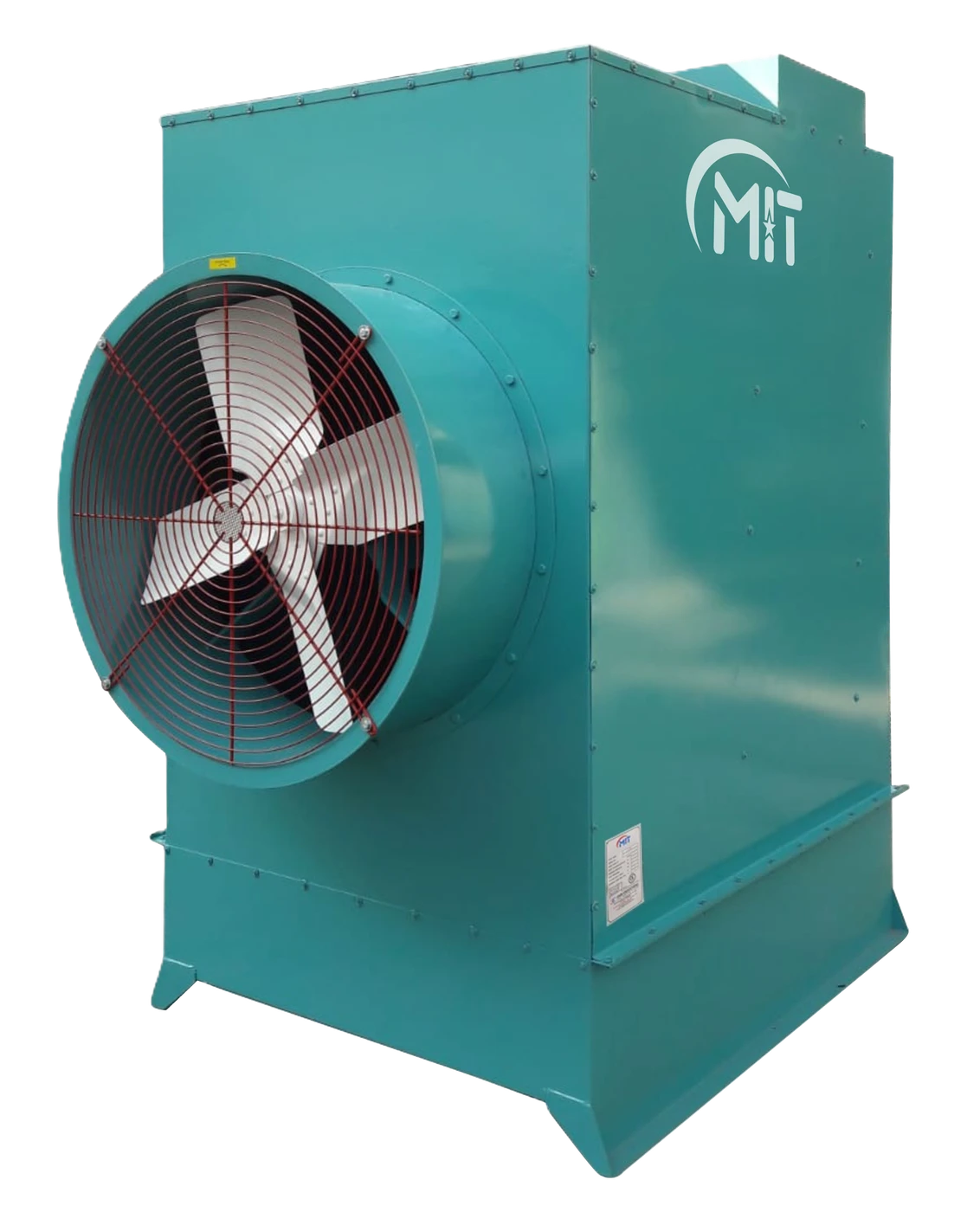
Why it matters
Used to reject water heated in a chiller's condenser or in a process to the atmosphere, at the lowest cost and down to colder temperatures than a dry cooler.
Because it works on the evaporation principle, it can bring the water temperature down to a level close to the wet-bulb temperature, lower than a dry cooler can reach.
Rejects the heat from a water-cooled chiller's condenser circuit, or from process equipment, using low energy.
Because most of the cooling is achieved through evaporation, the fan power needed is generally lower than for a dry cooler of the same capacity.
As needs grow, capacity can be scaled up in stages by running multiple cells (modules) in parallel.
Types
All three cool water by bringing it into contact with air; what sets them apart is the flow direction of the air and water, and whether the process water contacts the atmosphere.
Air flows upward through the fill pack, perpendicular to the water; this provides intense and efficient heat/mass transfer and is the type used most often in industrial facilities.
Air flows horizontally and water flows vertically; requires lower fan pressure and offers relatively easy maintenance access.
The process water circulates in a closed coil and is cooled indirectly by externally sprayed water and air, so the process water never mixes with the atmosphere.
Selection criteria
Capacity alone isn't enough. Once the six points below are clear, the choice narrows to a single model.
Cooling capacity
The water flow rate and the inlet/outlet temperatures together determine the capacity (kW or tons of refrigeration).
kW / TR
Water flow rate
The total water flow rate in the circuit; directly affects the tower size and the pump selection.
m³/h
Inlet/outlet water temperature and wet-bulb
The hot water's inlet/outlet temperatures and the region's wet-bulb temperature; determine the minimum achievable temperature.
°C
Tower type
Counter-flow, cross-flow or closed-circuit; determines whether the process water will contact the atmosphere.
Type
Material
Galvanized steel, FRP (fiberglass-reinforced polyester) or stainless steel; determines service life and maintenance cost.
Frame material
Noise and water-loss limits
Drift eliminator efficiency and the allowable sound level; decisive depending on the installation location (roof, ground, proximity to the site).
dB(A), eliminator class
It's fine if you don't have all of it. We'll fill in the gaps together with you.
Create a quote requestFAQ
The questions we hear most often when quoting cooling towers.
A cooling tower cools water by bringing it into direct contact with air and evaporating it, which lets it reach lower temperatures than a dry cooler. In return it requires water consumption, water chemicals and periodic maintenance. A dry cooler runs in a closed circuit and consumes no water, but the minimum temperature it can reach depends more heavily on the outdoor air temperature.
The risk is kept under control through regular water chemical dosing, periodic cleaning/disinfection and an efficient drift eliminator; an operating and maintenance plan is drawn up together with the project.
The closed-circuit type is preferred in applications where the process water must not mix with and be contaminated by the atmosphere and where water quality is critical (food, pharmaceutical, sensitive processes); the process water circulates in its own coil and is cooled indirectly by externally sprayed water.
Water losses other than evaporation (drift, blowdown) can be minimized with an efficient drift eliminator and automatic level/blowdown control.
No. While our office is on Istanbul's Anatolian side (Ataşehir), we supply and ship across Istanbul's European side, the surrounding provinces and the Marmara region, and Turkey as a whole — covering your equipment end to end, from a single source.
Sıradaki adım
Share the water flow rate, the inlet/outlet temperatures and your installation location, and let's determine the right cooling tower for your project together.
Related products
Complementary equipment you may need for your project.