Produces chilled water in a single unit
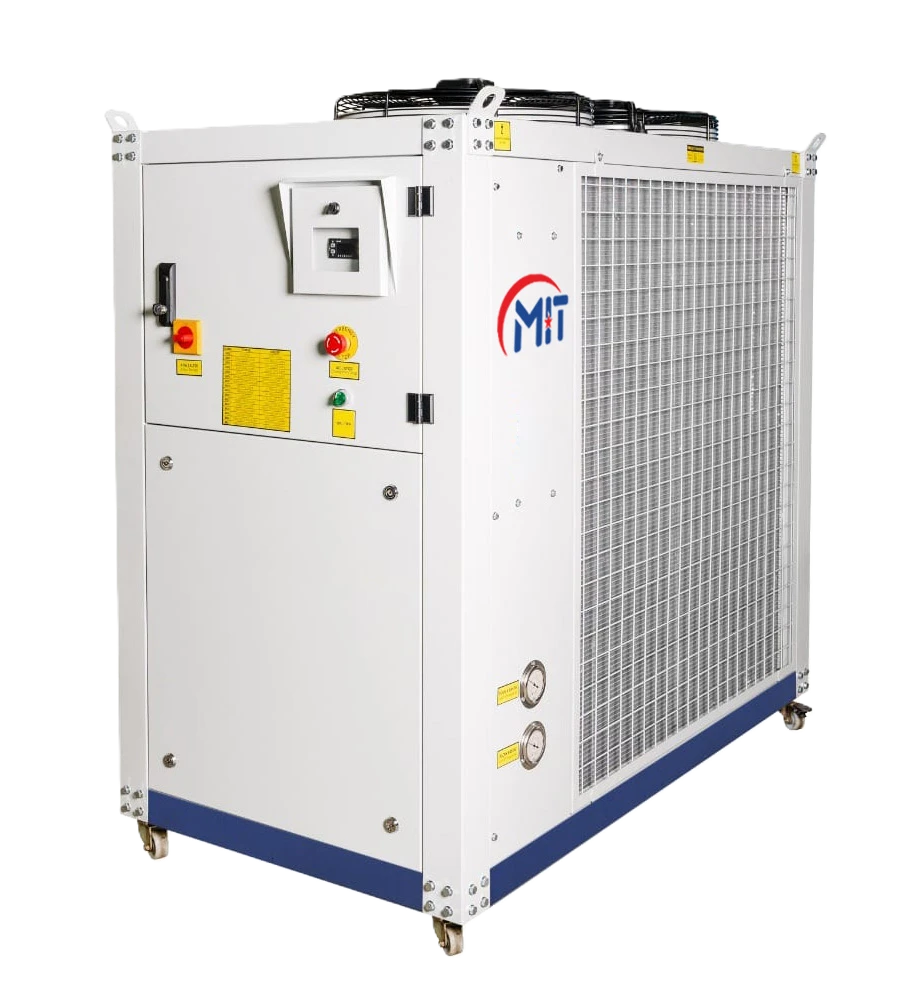
Houses the evaporation-compression cycle in a single package; the evaporator, compressor, condenser and control system all come together.
Product group · Cooling Group
A packaged cooling unit that produces chilled water through an evaporation-compression cycle. It rejects heat directly to the atmosphere in air-cooled types, or through a cooling tower or dry cooler in water-cooled types.
Why it matters
From comfort cooling to process cooling, a chiller handles this job in a single package wherever a system needs chilled water.
Houses the evaporation-compression cycle in a single package; the evaporator, compressor, condenser and control system all come together.
An air-cooled type is preferred when the water supply is limited; a water-cooled type working with a cooling tower or dry cooler is preferred when higher efficiency is required.
Scroll, screw or centrifugal compressor options keep the unit running efficiently even under the facility's variable load.
The same operating principle is applied at different scales, from an air handling unit's cooling coil to industrial process cooling.
Types
All three produce chilled water; what sets them apart is where they reject heat and their compressor design.
Rejects condenser heat directly to the atmosphere; needs no additional water circuit and is installed outdoors on a roof or on the ground.
Rejects condenser heat into a water circuit, which is then rejected to the outside through a cooling tower or dry cooler.
Delivers high efficiency even at part load, using multiple compressors or a speed-controlled compressor.
Selection criteria
Capacity alone isn't enough. Once the six points below are clear, the choice narrows to a single model.
Cooling capacity
The chilled water flow rate and the inlet/outlet temperatures together determine the capacity.
kW
Heat rejection type
Whether the unit is air-cooled or water-cooled; determines the need for a water source and a cooling tower/dry cooler.
Air-cooled / water-cooled
Refrigerant type
R134a, R410A, etc.; determines environmental regulations and the pressure class.
Refrigerant name
Compressor type
Scroll, screw or centrifugal; determines the capacity range and part-load efficiency.
Compressor type
Chilled water temperature regime
Inlet/outlet temperatures (e.g. 12/7 °C); determines the evaporator size and the flow rate.
°C in/out
Electrical supply and control
Power, phase and the need for integration with building automation determine the control selection.
kW, V/phase
It's fine if you don't have all of it. We'll fill in the gaps together with you.
Create a quote requestFAQ
The questions we hear most often when quoting chillers.
An air-cooled chiller rejects condenser heat directly to the atmosphere and needs no additional water circuit. A water-cooled chiller instead carries this heat to a cooling tower or a dry cooler through a water circuit; it generally runs at a higher efficiency but needs extra equipment and maintenance.
The required chilled water flow rate, the inlet/outlet temperatures (for example from 12°C to 7°C) and the outdoor design temperature are evaluated together to determine the capacity (kW).
Scroll compressors are preferred at small and medium capacities, screw compressors at medium-to-large capacities, and centrifugal compressors in large, continuously running applications; the part-load profile and the energy-efficiency target influence the choice.
Not with an air-cooled chiller. With a water-cooled chiller, a cooling tower or a dry cooler is needed to reject the heat from the condenser circuit.
No. While our office is on Istanbul's Anatolian side (Ataşehir), we supply and ship across Istanbul's European side, the surrounding provinces and the Marmara region, and Turkey as a whole — covering your equipment end to end, from a single source.
Sıradaki adım
Share the chilled water flow rate, the temperature regime and your heat-rejection preference, and let's work out the right chiller together.
Related products
Complementary equipment you may need for your project.