Provides hygienic water storage
The stainless steel shell lets domestic water be held under hygienic conditions for extended periods; it meets the water quality requirements of hotels, hospitals and food facilities.
Product group · Pressure Vessels
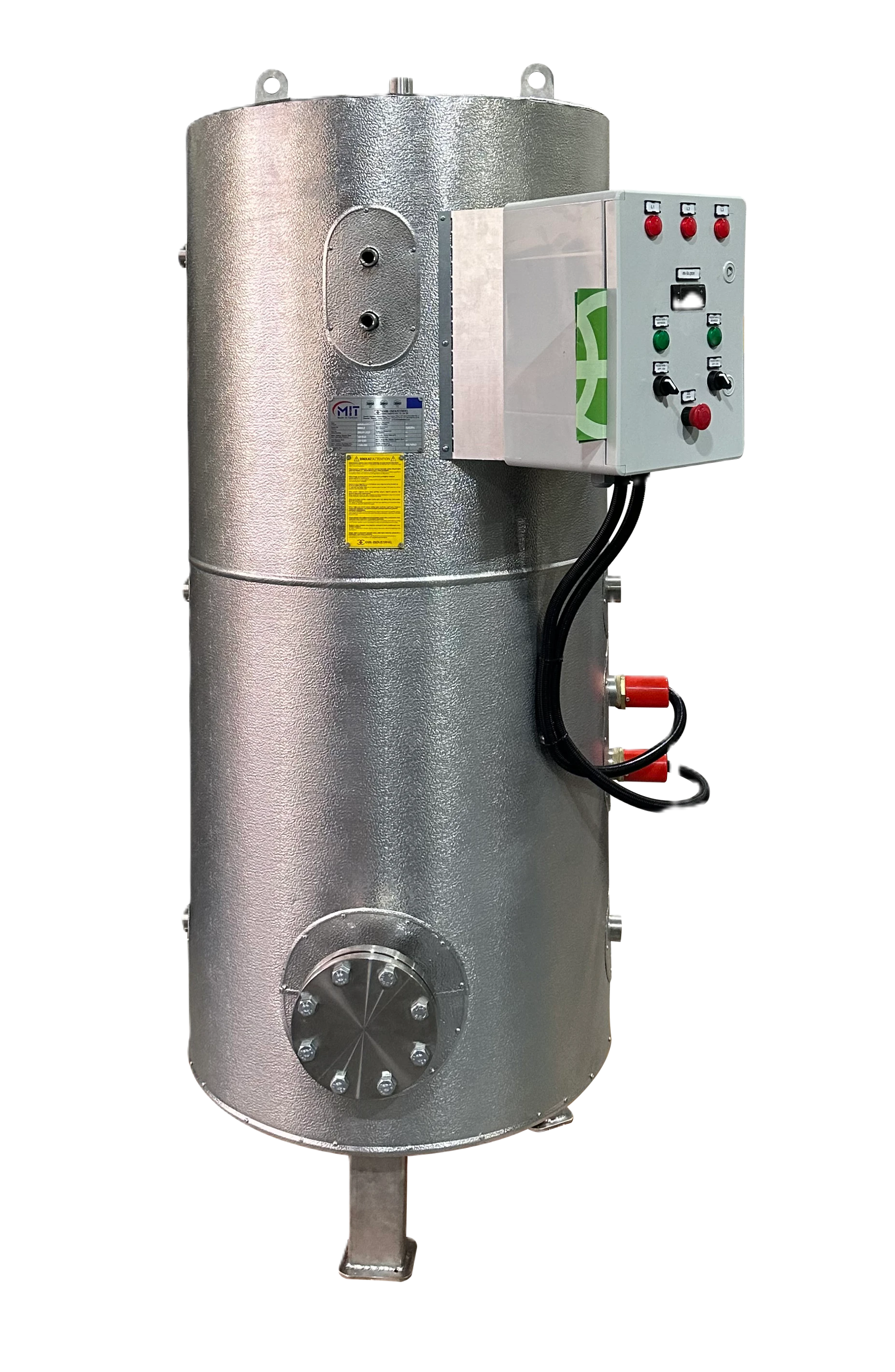
Stainless steel calorifiers are preferred for hotels, hospitals, food facilities and residential projects where domestic water must be stored under hygienic conditions. The corrosion-resistant AISI 304 or 316 grade shell eliminates scale- and rust-related water quality problems; we supply them with or without a coil, across a wide volume range.
Why it matters
The standard solution for facilities where domestic water must be stored under hygienic conditions and water quality is critical.
The stainless steel shell lets domestic water be held under hygienic conditions for extended periods; it meets the water quality requirements of hotels, hospitals and food facilities.
The grade is selected based on water hardness and chloride content; for projects requiring certification, it is supplied together with a material certificate.
Unlike enamel coating, the interior surface does not wear over time; it gives many years of service without corrosion risk, even in hard water.
Supplied with a coil or as a plain storage tank, depending on whether the heat source feeds through the inside of the calorifier or through an external exchanger.
Types
All three are built with a stainless steel shell; what sets them apart is the material grade and coil configuration.
A stainless solution with a good cost-performance balance, preferred on lines with standard water quality and moderate chloride content.
Thanks to its molybdenum content, it withstands chloride-bearing water and aggressive water chemistry better; preferred in hospitals and food facilities.
When the heat source is supplied through an external exchanger, the calorifier serves only as storage; preferred in large-volume central systems.
Selection criteria
Selection cannot be made without the first two items. The rest determine the material grade and fittings.
Volume
Calculated from the number of simultaneous users and consumption habits.
L
Water quality (chloride content)
AISI 316 is needed for high-chloride water.
304 / 316
With or without a coil
Whether the heat source feeds through the inside of the calorifier or through an external exchanger.
With coil / without coil
Number of heat sources
Single or two different sources (on coil models).
1 / 2 sources
Operating pressure
Must match the mains or booster-pump supply pressure.
bar
Connection size and installation location
Inlet/outlet and coil connection sizes, and the boiler room layout.
DN size + installation clearance
It's fine if you don't have all of it. We'll fill in the gaps together with you.
Create a quote requestFAQ
The questions we hear most often when quoting stainless steel calorifiers.
Thanks to its molybdenum content, 316 is more resistant to chloride-bearing water and aggressive water chemistry than 304; 316 is recommended for high-chloride mains water or coastal installations.
Enamel coating can crack and wear over time and needs anode protection; a stainless steel shell resists corrosion for many years without that maintenance.
When the heat source is supplied through an external plate heat exchanger, the calorifier only serves as storage; this layout is more flexible in large-volume central systems.
In food and pharmaceutical facilities, compliance with hygiene principles such as EHEDG/3-A may be required depending on the project; material and surface finish are chosen accordingly.
No. While our office is on Istanbul's Anatolian side (Ataşehir), we supply and ship across Istanbul's European side, the surrounding provinces and the Marmara region, and Turkey as a whole — covering your equipment end to end, from a single source.
Next step
Share your volume needs and your water quality, and let's determine the right stainless steel calorifier for your facility together.
Related products
Complementary equipment you may need for your project.