Constant pressure delivers the same comfort on every floor
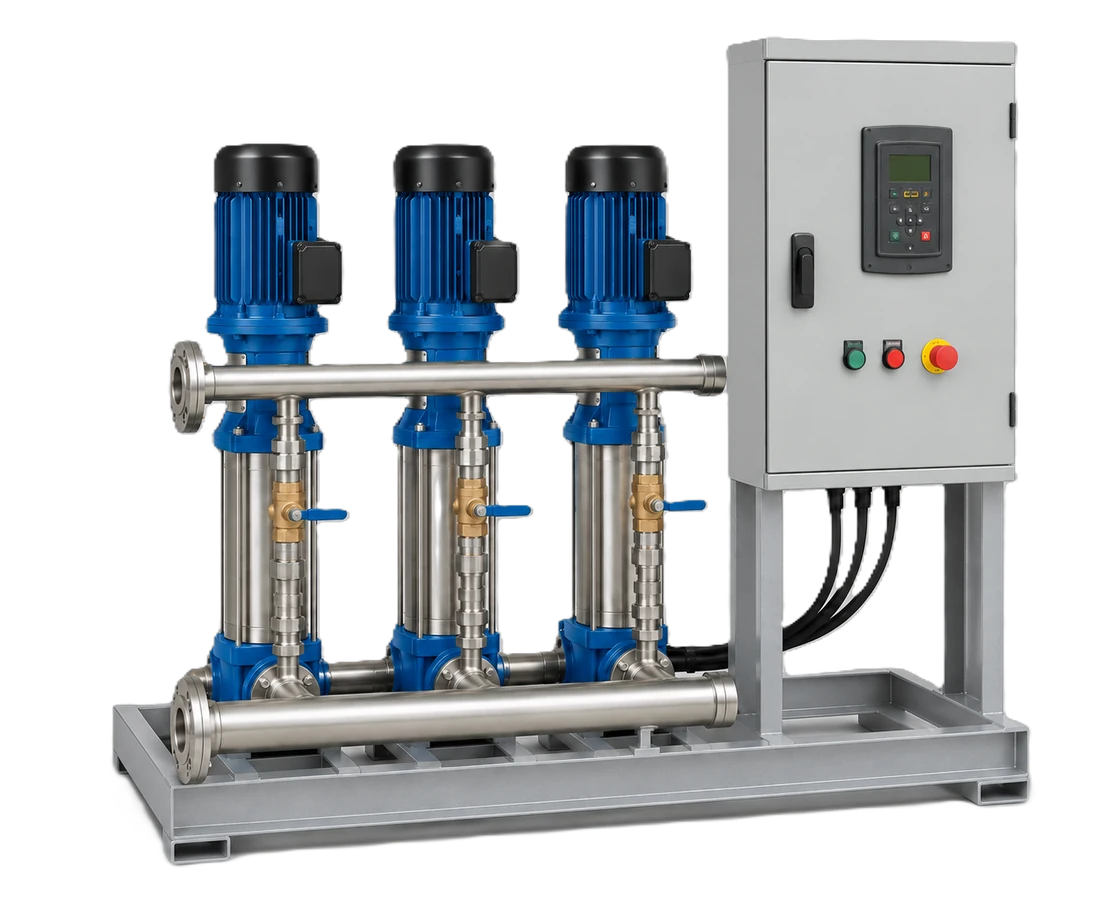
The frequency-converter panel keeps outlet pressure constant even as demand changes; the tap on the top floor flows just as smoothly as the one on the ground floor.
Product group · Flow Transfer Products
Booster pump systems keep water at the desired, constant pressure in buildings and facilities where mains pressure falls short. The frequency-converter control panel automatically adjusts pump speed to instantaneous demand, optimizing energy use; available in single- or multi-pump, stainless multistage casing options, they are commissioned on domestic water, fire and process lines.
Why it matters
It keeps water at constant pressure on upper floors and process lines where mains pressure is insufficient.
The frequency-converter panel keeps outlet pressure constant even as demand changes; the tap on the top floor flows just as smoothly as the one on the ground floor.
Pump speed adjusts to instantaneous demand; electricity consumption drops noticeably compared with fixed-speed systems.
Multiple pumps engage in sequence or in parallel; if one fails, the system keeps running without a water outage.
When inlet pressure or water level drops, the system shuts down automatically, preventing the pump from running dry and being damaged.
Types
All three keep outlet pressure constant; what sets them apart is the pump count and control logic.
A simple, economical solution preferred for small residential and commercial installations with low-to-medium flow and a single consumption line.
Multiple pumps engage in sequence or in parallel according to demand; used in buildings and facilities that need redundancy and high flow rate.
Pump speed is continuously adjusted to demand; there is no pressure fluctuation, and energy use is kept to a minimum.
Selection criteria
Without the first two points, selection cannot be made. The rest determine the configuration and fittings.
Instantaneous flow demand
Calculated from the number of simultaneous taps/consumption points.
m³/h
Pressure requirement
The outlet pressure needed at the farthest and highest point.
bar
Pump count and redundancy
A single pump, or a multi-pump setup that avoids downtime during a fault or maintenance.
1 / multi-pump
Supply source
Fed directly from the mains, or from an intermediate tank/reservoir.
Mains / tank
Intended use
Domestic water, a fire line, or process water.
Domestic / fire / process
Dry-run protection
Whether the pump needs to stop automatically on an inlet outage.
Included / requested
It's fine if you don't have all of it. We'll fill in the gaps together with you.
Create a quote requestFAQ
The questions we hear most often when quoting booster pump systems.
A single pump is enough for small installations with one consumption line. For buildings and process lines that need redundancy or high flow rate, a multi-pump setup (2-6 pumps) is preferred.
A fire booster system keeps the high flow rate and pressure needed in a fire event constantly ready; it is usually a separate system. A domestic water booster system meets daily water demand; the two can be combined into one system, but designing them separately is recommended.
If the system is fed from an intermediate tank or reservoir, water supply continues. If it is fed directly from the mains, dry-run protection kicks in and the pumps stop automatically; no water can be delivered during the outage.
An annual periodic maintenance checks the pressure settings, dry-run sensors and pump shaft seals; for systems that run continuously, this interval can be shortened.
No. While our office is on Istanbul's Anatolian side (Ataşehir), we supply and ship across Istanbul's European side, the surrounding provinces and the Marmara region, and Turkey as a whole — covering your equipment end to end, from a single source.
Next step
Share the simultaneous demand and desired outlet pressure, and let's determine together the right booster system for your installation.
Related products
Complementary equipment you may need for your project.