Delivers high-dryness steam
Water droplets in the steam are separated out, raising the dryness fraction; this lets process equipment operate closer to its design efficiency.
Product group · Pressure Vessels
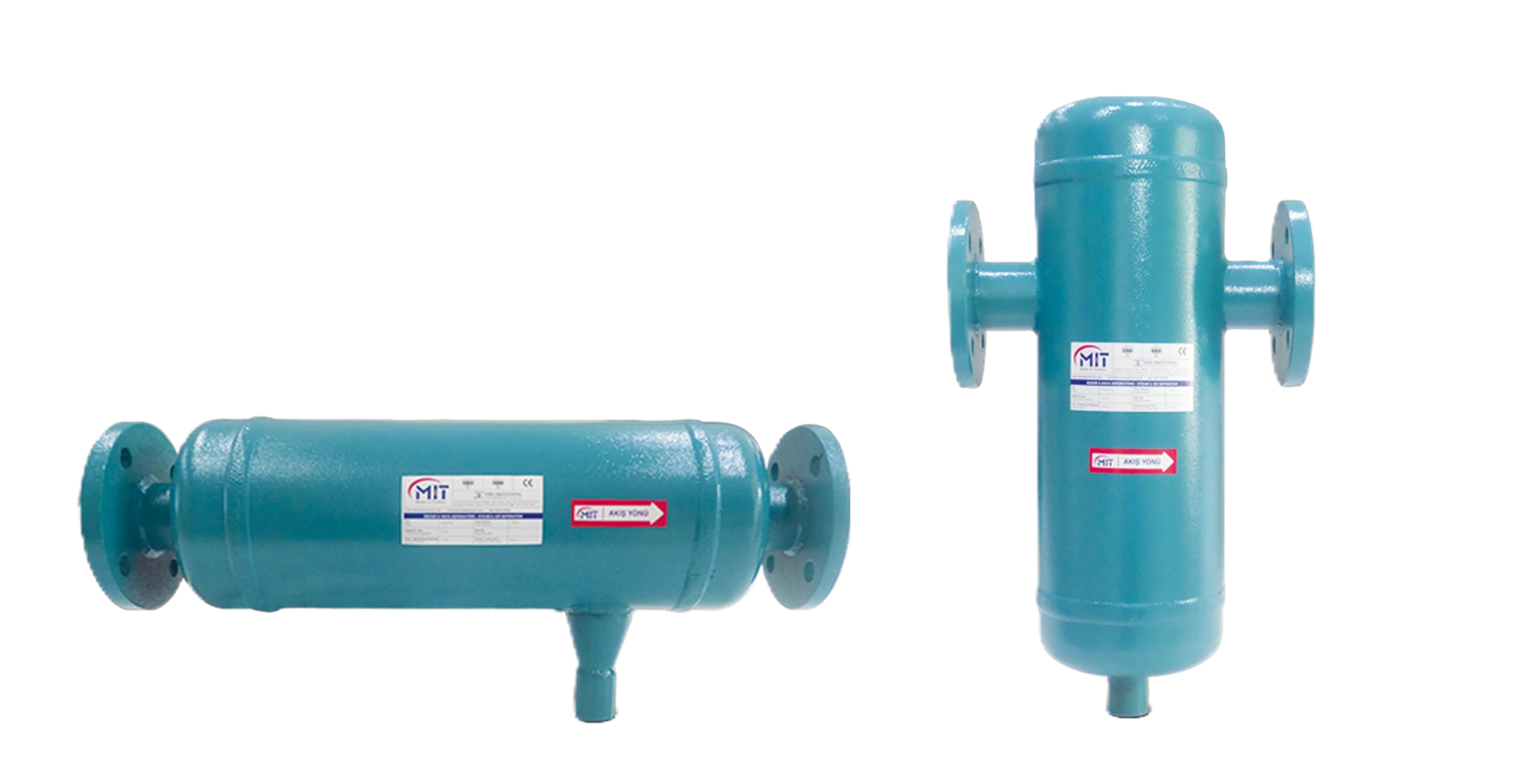
Steam separators remove entrained water droplets from steam in the line, delivering steam with a high dryness fraction; wet steam reduces process efficiency and causes erosion in valves and equipment. At Denfor Endüstriyel, we supply steam separators with a discharge port suited to steam trap connections and material options matched to line pressure.
Why it matters
It removes water droplets from the line, delivering high-dryness steam the process can rely on.
Water droplets in the steam are separated out, raising the dryness fraction; this lets process equipment operate closer to its design efficiency.
Water droplets in wet steam strike the interior surfaces of valves and pipes at high speed, causing erosion; the separator significantly reduces this risk.
Condensate accumulating in the line can be carried along by the steam flow and cause water hammer; the separator regularly discharges this water.
The separator's flow-directing internal design separates out water with a low pressure drop, without creating a significant loss in process pressure.
Types
All three remove water droplets from steam; what differs is the separation mechanism and installation method.
Spins the steam, throwing water droplets against the shell wall by centrifugal force; the most widely used, reliable type.
Internal plates direct the steam flow so water droplets strike them and separate out; preferred on compact lines.
Built with a reinforced shell and special gasket material for high-pressure process steam lines.
Selection criteria
Selection cannot be made without the first two items. The rest determine material and discharge fittings.
Line flow rate
Shell size is determined by the mass flow rate of the steam line.
kg/h
Line pressure and temperature
The separator shell and gasket are chosen to match these values.
bar / °C
Current dryness fraction
How wet the steam is determines the targeted improvement rate.
% dryness
Discharge type
Whether it will be discharged with an integrated steam trap or a separate line.
Integrated / separate line
Shell material
Carbon steel or stainless, matched to line pressure and temperature.
Carbon steel / stainless
Connection size and installation point
Flanged connection size and distance to the process equipment.
DN size + installation position
It's fine if you don't have all of it. We'll fill in the gaps together with you.
Create a quote requestFAQ
The questions we encounter most often at the steam separator quote stage.
It is generally recommended to install it just before the process equipment, at the points where the steam is wettest (ends of long lines, after a rise).
Yes, the water separated out in the separator is discharged from the line via a steam trap; the separator and the steam trap are generally ordered together.
Water droplets reduce process heat transfer, cause erosion on the interior surfaces of valves and pipes, and increase the risk of water hammer; dry steam significantly reduces these risks.
It is especially recommended on long steam lines, after a rise, and upstream of sensitive process equipment (turbines, injectors, sterilization units).
No. While our office is on Istanbul's Anatolian side (Ataşehir), we supply and ship across Istanbul's European side, the surrounding provinces and the Marmara region, and Turkey as a whole — covering your equipment end to end, from a single source.
Next step
Share your steam line's flow rate and pressure, and let's work out the right separator for your process together.
Related products
Complementary equipment you may need for your project.